Smart Car Test Drive!

Smart Car Test Drive!
Click for Robin's review of this little dandy.

Robin in Television News

Robin in Television News
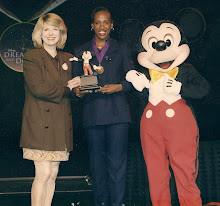
A trip to Bahrain at the end of the Gulf War was one of her assignments. Those characters were the secret police assigned to keep their eye on her. Fascinating place, the Middle East. Click for more on Robin's years in television.

Liz Taylor's Legacy

Liz Taylor's Legacy
Click for Robin's piece on the best and the worst of Taylor's life in film.

Tuesday, February 24, 2009

Uncle Bob, My Favorite Vampire

A Tribute by Steve Latshaw


Robert Quarry, the tall, charismatic actor with a velvet voice known for his iconic horror roles as Count Yorga and the Deathmaster, died Friday in Woodland Hills. He was 83.

I knew him, thanks to the generosity of my friend, Fred Olen Ray, who, apart from directing some of Quarry’s memorable films, made Uncle Bob part of his family. Quarry was always a wonderful, delightful, funny presence, whether on set or sitting across the table over drinks and dinner.

An intellectual with an IQ of 168 and a Lifemaster at Bridge, Quarry also found time to author a well-received cookbook. A gourmet chef who studied at the Cordon Blue in Manhattan, his Wonderfully Simple Recipes for Simply Wonderful Food sold over 60,000 copies after its debut in 1988.

He was born in Santa Rosa, California, on November 3, 1925. Brainy enough to have finished high school by the age of fourteen, he was already speeding into the world of theater. By the early forties he was getting steady radio work on series like Dr. Christian. And being a Santa Rosa resident, he made his un-credited screen debut in the classic 1943 thriller Shadow of a Doubt when director Alfred Hitchcock brought his production unit to town for location shooting. A stint in the Army Corps of Engineers followed, with Quarry maintaining his ties to show biz by producing The Hasty Heart with a G.I. cast.

After the war and well into the 1950s, traveling between New York and Hollywood, Quarry maintained his radio and Broadway schedule in between appearances on such TV shows as The Lone Ranger, Philco Television Playhouse, Mike Hammer, and the Hallmark Hall of Fame. He broke into feature films in 1955, appearing opposite Clark Gable and Susan Hayward in Soldier of Fortune. He then played opposite Robert Stack and Robert Ryan in Sam Fuller’s House of Bamboo and had a small but showy role in A Kiss Before Dying, with Robert Wagner. After appearing in two films opposite Paul Newman, W.U.S.A and Winning, Quarry found himself on the threshold of stardom.

Low budget, tongue-in-cheek horror films had caught a wave in the hip seventies. Robert Quarry was hot. His character: Count Yorga, Vampire. His unique take on the implausible—he played the Count with all the menace of Christopher Lee, the charm of Bela Lugosi and with a certain wink and a nod to the audience—made Count Yorga a big hit. It spawned a sequel and put Quarry on his way.


But, after the string of hits ended with Madhouse, Quarry suffered a car accident that damaged his health and career. By the early eighties, work was hard to find until Quarry met a young filmmaker named Fred Olen Ray. Ray had grown up on a healthy diet of Quarry’s kind of horror and was determined to bring him back to star status.

And that he did. After supporting roles in two of Ray’s features (Cyclone and Commando Squad) Quarry returned to star status in Ray’s Sci Fi serial send-up Phantom Empire, opposite Jeffrey Combs and Sybil Danning. The surprise video hit featured Quarry returning in his adventurer costume from Dr. Phibes Rises Again (in which he starred opposite Vincent Price) and parodying himself to the limit in what has become a cult classic. He made the productions enjoyable, preparing gourmet meals for cast and crew. Much work followed, as a younger generation of filmmakers sought out Quarry’s services to lend a dash of class, elegance and humor to their films.

I have some personal memories of him. I consider myself very lucky to have been invited into the circle of director Fred Olen Ray 's extended family of friends. I always called him Mr. Quarry—out of respect. And here's another reason why:

Some years ago, the summer of 1990, I think, I was preparing to come out to California from Florida for a meeting with Fred. Accompanying me was a mutual friend, we’ll call Russ, also from Florida, and a partner on the project we were doing. Russ had been out the year before and had spent time on the Alienator set, hanging around with the drive-in movie actor and actress team Ross and Claire Hagen and also with Robert Quarry. We were all star-struck at Russ’ good fortune. But Russ had a warning. "Don't," he said. "Don't ever call him Uncle Bob!"

I looked at my friend, a little concerned. I could still see fear in his face from some horrific incident that must have happened on that Alienator set. I nodded. "Go on, what happened?"

Russ shook his head. "I called him Uncle Bob. Bad mistake."

Apparently, actress Dawn Wildsmith (Ray's wife at the time) had been the first to call him Uncle. It spread to the immediate family. Mr. Quarry sometimes lived with the Rays and would babysit Chris, one of Ray's sons.

Russ had visited the Rays at home that summer, parking his camper trailer outside the Ray residence (even running a power line off the Ray house—as well as using the showers, food, booze, and whatever was on the shelves). Apparently Russ had heard Uncle Bob this and Uncle Bob that and had assumed it was the preferred way of addressing Quarry.

So while visiting the set of Alienator, Russ noticed Quarry was working that day. It was a meal break. Everyone was exhausted. No one was really in the mood for chats with fans. Nonplussed, Russ grabbed a paper plate and, in true fan-boy style, approached Mr. Quarry, who was standing in the lunch line.

"Hey, Uncle Bob. Sign this for me, will ya?"

Quarry whirled around, took a long, hard look at him and said, "I am not your G-- damned Uncle!"

What my friend couldn't know was this wasn't cruelty: this was Mr. Quarry getting a laugh. And laughs he got. He had that hair trigger temper that was mostly show combined with a brilliant and very quick wit.

My friend, nevertheless, a sometimes overly enthusiastic autograph hound, slunk away.

It seems Quarry was very particular about who called him Uncle Bob. Only family was allowed that privilege. And Fred Olen Ray and his family were in that very select group. As the years went by, folks wore him down with the Uncle Bob thing and he eventually stopped objecting. But I stuck with calling him Mr. Quarry whenever we met. It felt right to me.

My fondest memory was a Christmas night at Fred’s. We’d all gathered for dinner. Mr. Quarry had struggled with heart problems in the last years, and was limited to his two beloved cigarettes per night. So, we were all out on the back porch, in the cold and wet, enduring misty rain, drinking our drinks and smoking our cigars as Uncle Bob puffed away for two hours, telling tall tales and true about Hollywood and his pals Howard Hughes, the Barrymores, Errol Flynn, Susan Hayward and especially catty stories about Vincent Price, his rival as a horror icon.

I came away from that evening with a bad case of bronchitis; but, every single cough was worth it. Here’s the wonderful thing and the key to this delightful man: whatever you called him, he always treated you as if he was your Uncle Bob. And, beyond the delightful films he left for us to enjoy, that is a treasure for the ages.

Steve Latshaw
Hollywood, California

Robert Quarry in his most popular dinner clothes.
Read more!

Thursday, February 19, 2009

St. Robin of Los Altos Gets Her Halo: As If!


My Dad isn't really cross in this picture he just isn't smiling. "It cracks my face," he says. "Because my face isn't used to it."

I'm finding it more difficult to write about my father and his dementia now that I am seeing him nearly every day. Perhaps I can't step back and get perspective now, or perhaps it is more painful up close--I honestly don't know yet. I just know that now, I keep thinking of other things to write about--other things that are farther away.

Perhaps it is just this: now that I am living less than a mile away from my father and see him almost every day, he continually tells me he doesn't see me enough. I know this is because he doesn't remember that he just saw me yesterday or a few hours ago, and that this is not his fault, but it does tend to make a person feel unappreciated. I took my father for coffee the other morning, just to give him a chance to get out of the house, which he loves. We spent a hour or more together. I bought him several iced cookies, and paid to have his coffee refilled twice.

It was pouring rain and getting him to and from the car with his walker was a challenge. His caregiver and I both got very wet holding the umbrella for him. When we were getting ready to depart, I moved my car at right angles to two empty parking places to make it easier for him to approach and get into the vehicle. There wasn't a good ramp nearby. This must be a serious sin in California because an older couple in a Mini Cooper stopped their car, rolled down their window (in spite of the rain) and yelled at me: "What kind of idiot are you," the man spit out. "Blocking three parking places like that?"

I threw my hands up in the air and looked back at my almost-ninety-year-old handicapped father. "He's old and he can't walk," I said in a voice louder than I had intended. "You might be there someday yourself!" The man and his wife drove away and parked elsewhere.

When we got back to the house, I put Dad on the couch--the world's most uncomfortable couch which "graces" my parent's country kitchen--and I sat across from him in the uncomfortable kitchen chair at the uncomfortable kitchen table and picked up the newspaper. I had been so busy giving care to everyone but me that day, I had missed this one thing I always do because I love to do it. I figured it was time for my father's pre-lunch doze and now I could read up on the events of the world. I figured wrong.

"Robin, I don't see your very much," said my father, sitting over on that ugly and uncomfotable object. "And so when I do see you I don't like to see your nose behind that newspaper."

I looked over the paper at him and smiled. He wasn't being grouchy, really. He just wanted attention. I put the paper down for a minute and after we exchanged a few pleasantries--never an easy task because he's deaf and you have to converse in writing--he put his head back and fell asleep.

I shifted my bottom in the hard wooden chair and picked up the paper again. This St. Robin of Los Altos gig is going to be much tougher than I thought.


Read more!

Monday, February 16, 2009

When Was George Washington Really Born? A Mystery for Presidents Day.


George Washington was not exactly born on February 22 as we have all been led to believe. That's because George Washington was born during the time that Great Britain and her colonies used the Julian Calendar, something we no longer use today.

The Julian Calendar was established by Julius Caesar, 46 years BCE, and for more than fifteen centuries it was the standard calendar of the Western world--and of some of the Eastern as well. Caesar established a year that was 364.25 days long, designed to synchronize with a complete cycle of the earth's seasons. But his year was eleven minutes, fourteen seconds too slow.

This didn't mean much for a while. But, by the sixteenth century, the date that marked the New Year (which was then on the first day of spring) was ten days behind the vernal equinox.

So, in 1582, Pope Gregory XII consulted with his scientists and devised a new calendar so accurate that it is still in use today and is called the Gregorian calendar in his honor. To make it work, he created leap years, unless the scheduled leap year was divisible by four. He then decreed that the New Year would henceforth begin January 1 instead of March 25. And to get the calendar caught up with the seasons, he told everybody they were going to have to lose 10 days. Imagine. You and I have lost days we can't remember, but this was endorsed by the Holy Father himself.

October 4, 1582, would have to be followed by October 15, 1582. Since he was the Pope he could order this sort of thing and have it happen, just like that.

Well, almost. By the sixteenth century, the Western world was no longer entirely papist. The Reformation had swept Europe, the Orthodox churches in the East were now following their own calendar, and it took several centuries for the Gregorian calendar to be widely adopted, especially in Protestant countries.

So back to George Washington, you say. Well, his birth date in the eighteenth century was caught up in all this. Britain and her colonies finally adopted the Gregorian calendar in 1752, when GW was (more or less) 20 years old (more about that in a minute) and by that time they had to add eleven days to make the calendar come out right. September 2, 1752 was followed by September 14, 1752. Are you confused yet?

So George Washington got a new birth date. The original date of his birth, February 11, 1731 (now called Old Style, or O.S.) was changed to February 22, 1732 (now called New Style, or N.S.) The change in the year of his birth came because Washington was born between January (when the New Year now began) and March (when the New Year had begun). I hope you are still following me.

If you think this is a brain teaser, imagine how it was for people who lived through it. A full five years before the switch, a teenage George Washington made a diary entry dated "Fryday, March 11th, 1747/8." It suggests that the upcoming change in the calendar was on his mind, and that he was noting it in advance, perhaps for the sake of accuracy, or as a reminder if he should look back at his writings one day.

He lived through so many remarkable changes in his lifetime, perhaps this change in the calendar is one of the least noted. And yet it remains intriguing.

What happened, do you supposed, to the eleven days everyone in America lost in 1752?

And when Washington died in 1799, was he 68 years old, or really 67?


Read more!

Monday, February 2, 2009

Time Travel and Blenheim Apricots


I’ve developed a theory in the last few years about time travel. I don’t know if we’ll ever actually be able to do it in the physical sense: but I believe that in our memories and in our dreams it is always possible.

This is especially relevant as I return to California and to the town where I was born. Here, I have a present in which I’m renewing old friendships, making new ones, writing about events of the day, researching a book, and helping my aging parents.

In this place, I also have a past in which I can travel. Here, my teenage boyfriend and I had our first halting kiss. Here, I rode my bike to my friend Keith’s house after his mother died. Here, my Dad, my sister and I spent Saturdays in the yard, Dad always mowing and raking and hammering and Kimmie and I catching lizards and swinging on the backyard swing. Here my friend Leslie and I took the train to San Francisco for our first solo shopping trip. I loved the dress she bought: a green paisley print with a tiny belted waist. San Francisco Giants games with Dad, high school proms, kindergarten nap time. And it is all steeped in the perfume of Blenheim apricot trees on the summer wind. I can see and hear and catch the scent of all of it still.

At my high school reunion last summer I met a boy--well a man actually, but he seemed a boy to me--whom I’d gone to school with for a dozen years long ago but had never known. We went to dinner one night and he pointed to a building on the Stanford University property as we drove by. “I was born in Palo Alto hospital right there,” he said. “Not the Stanford Medical Center. That big building there used to be the city hospital.” “Yes I know,” I said. “I was born there the same year you were.”

I can see the future here too. But when I travel there my dreams are secret and evaporate if I speak or write of them.

In Florida I lived entirely in the present. I liked it there: don’t get me wrong. But I had come there to work and then I just stayed, a clear example of Newton's First Law at work: an object at rest tends to stay at rest. The time travels I made there were about other lives and took the form of history research and writing. That way I developed a past to travel in, but it was not my own.

Yesterday, my father was having a cranky moment. His weekend caregivers are often strangers to him and their otherness sometimes combines with his disease to make him angry and agitated. He gets discouraged that he needs so much help. His identity was always based on the many impossible things he could do for my mother.

“I’m just no good anymore,” he said as we sat down to lunch. He is deaf now, so we have to write our conversations with him.

“We love you Dad ... Mom and Kim and I, and we need you,” I wrote. “Please smile and be happy. I love you so much, I’m moving here because of you.”

His eyesight and his reading comprehension are very bad these days and he read what I wrote very slowly. Then he looked up.

“I hope that’s not true, because I’m not going to be around very much longer."

I tsked tsked his comment. I don’t want to be without him. But I think people who are old and sick can often see with clarity what those around them do not want to see.

What he can’t know is that I’m here for completely selfish reasons. I’m making memories for the future with him now, every moment. They will give me new, much beloved, material for my time travels to come.


Robin and her father in Shoup Park, Los Altos, California 2004
Read more!

Wednesday, January 21, 2009

Best Classic Films of American Politics

With the inauguration of our 44th president, I got to thinking about some of my favorite classic films that focus on politics, politicians, and on both the cynical and naive in the American dream. Take a look and see if you agree that these are some of the best.

1. ADVISE AND CONSENT (1962) A very timely tale of a political nominee with a secret, based on Allen Drury's best-selling novel. The dark wheeling and dealing that takes place in Washington's smoke-filled rooms is sadly reminiscent of the most cynical side of American politics. An amazing cast that includes Charles Laughton, Henry Fonda, Walter Pidgeon, Lew Ayres (as the nice-guy Vice President nobody talks to), Burgess Meredith, Gene Tierney, Frnachot Tone, Paul Ford, Peter Lawford, and Will Geer.

2. BORN YESTERDAY (1950) The blonde mistress of a junk king who has come to Washington to buy himself a few congressmen, gets a civics lesson from an idealistic reporter. The Pygmalian story re-told with red, white, and blue thrown in. Judy Holliday won an Oscar for her role as Billie Dawn the show girl who learns from William Holden that the peoples' government is not up for sale.

3. THE GREAT MAN VOTES (1938) Thanks to some political gerrymandering, an alcoholic professor ends up holding the one deciding vote in an important election. Will he sell himself to the highest bidder? I learned of this film from NBC's Chris Matthews and have loved it ever since. John Barrymore in one of his last films, still great, even at sunset.

4. THE MAN WHO SHOT LIBERTY VALANCE (1962) An idealistic lawyer on the frontier goes to Washington as a Senator on the strength of a legend that he rid the town of Shinbone of its cruel bully. But did he? Another sly offering from that old Irish magician John Ford with Jimmy Stewart as the lawyer and (who else but?) John Wayne as the angel Stewart needs to fufill his destiny. "When truth becomes legend, print the legend."

5. SEVEN DAYS IN MAY (1964) All the paranoia of the Cold War era wrapped into a taut film. Are there communists under every bed or are the right wing militarists one step ahead of them and planning a coup? A far-fetched tale but an interesting look at its time, with a cast that includes the great Frederic March, Kirk Douglas, Burt Lancaster, Ava Gardner, Edmund O'Brien and John Houseman.

6. THE GREAT McGINTY (1940) Writer/director Preston Sturges' first big hit. The tale of a down-and-out hobo who parlays some crooked votes into a political career. As the director described it: "This is the story of two men ... One of them never did anything dishonest in his life except for one crazy minute. The other never did anything honest in his life except for one crazy minute. They both had to leave the country." Brian Donlevy is the star but Sturges provides the great plot and dialogue.

7. YANKEE DOODLE DANDY (1942) The story of patriotic vaudevillian George M. Cohan. Only the flag-waving music is political, but its worth the show to see tough-guy James Cagney dancing. At the end, he dances down the steps of the FDR White House. Very good show and an Oscar for Cagney.

8. JUDGMENT AT NUREMBERG (1961) An out-of-office American jurist is tapped for the job nobody wants: heading a panel hearing the case of Nazi judges who corrupted the law to suit Hitler. Maximillian Schell (who fled the Nazis) won an Oscar as the German defense lawyer, Spencer Tracy plays the idealistic judge. Everybody is in this including Marlene Dietrich, Judy Garland, Montgomery Clift, Burt Lancaster, Richard Widmark, Werner Klemprer, and (here's a surprise for you young folks) William Shatner (pre Star Trek) as a handsome American officer.

9. THE FARMER'S DAUGHTER (1947) Its corny, but Loretta Young won an Oscar for her role as the Cinderella who takes on the corrupt political machine and wins a seat in Congress and a congressman in the process. A good look a stereotypes, in a year when we hope to have moved beyond them. Joseph Cotton, Ethel Barrymore, and Charles Bickford make it all irresistible.

10. MR. SMITH GOES TO WASHINGTON (1939) I had to include this, though I think it is over-cited on lists like my own. In real life, the evil Claude Rains character would not have had that epiphany nor saved us all from lengthy prosecution by conviently bumping himself off, but, oh well. This is Frank Capra's Washington and we have to love it. Jimmy Stewart should have won his Oscar for this role, but it was the year of GONE WITH THE WIND, THE WIZARD OF OZ, and STAGECOACH, among other great offerings, so he won it the next year for the PHILADELPHIA STORY, not nearly so great a part (and that year the Oscar should have gone to Henry Fonda for THE GRAPES OF WRATH.)

Oh, and one I remembered as I was driving around this afternoon:

11. THE TALL TARGET (1951) As Abraham Lincoln takes the train to his inauguration in Washington, a discredited police officer and a black servant girl thrwart a plot to assassinate him. Ruby Dee stars as the servant, and when I interviewed her one year at the Zora Neale Hurston Festival in Etonville, Florida she was surprised I knew of the film and said she remembered it with great affection. Also starring Dick Powell, Adolphe Menjou, and Will Geer.

Enjoy!
Read more!

Friday, January 9, 2009

Obituary for Old Mr. Con

Old Mr. Con died this morning. He was one the first men to make a million dollars developing real estate in Florida after World War II. Everybody had a story about him: one man told me about a guy who hauled dirt for Mr. Con for thirty years. The man was poor and had just one truck and each week, so the story goes, Mr. Con would dispute Mr. Dirt’s bill. If it was $200, Mr. Con would offer him $150, and if it was $100, Mr. Con would offer him $75. Finally, Mr. Dirt started padding his bill by about twenty-five percent so that when Mr. Con got him to knock it back down, Mr. Dirt could collect the actual amount of money that was due.


(At right: Old Mr. Con at the Reagan White House. You could go there if you gave enough money to the Republican party. Old Mr. Con always gave to both parties, so he would always have a friend in high places.)


Most people laughed when they told a story like this because Mr. Con was so charming that even when he was conning you it was hard to dislike him. To regional business people, Mr. Con gradually became—to borrow a phrase from Truman Capote’s Breakfast at Tiffany’s—a real character from characterville. Eccentric and funny, ethically-challenged and extremely cunning, he told anyone who would listen that God talked to him each night and was responsible for helping to make him rich. This was Mr. Con’s most inspired assertion: first of all, He is the best reference a man can give, and, even better than that, He is the only reference for which the failure to verify can be seen as a triumph for the referring party. What? You couldn’t contact Him? Too bad sonny, I’ll speak to Him about it tonight.

In 2006, when he was 85, Mr. Con asked me to work with him on his biography. After doing some research on his life I pondered this proposal. How would we handle, for example, the conflicts he had with local governments over the chronic sewer backups in some his developments? Would he let me be honest about his federal indictment for allegedly breaking into his own safe deposit box—which had been seized and sealed by the IRS—and trying to scoot with at least $800,000 in disputed assets he’d stashed there? After much thought, I convinced Mr. Con to call the project “memoirs” instead of “biography.” I figured the memories this man had might be of interest to history, even if they were not always literally true.

Unlike many elderly people who are up at dawn, Mr. Con liked a late start. He explained this by saying that since God spoke to him each night in his dreams, “I have to wake up and write down what He says before I can go back to sleep again. So He keeps me up late.” In fact, Mr. Con ran late all day, often keeping local dignitaries cooling their heels in his outer office for hours. During those long waits, guests could while away the time reviewing the cheerful words on Mr. Con’s business cards, including a long list of exhortations like; “Keep your mind free from worry. Keep your heart free from hate. Think of others. Scatter sunshine. Give much.” If you took all this advice, you could become one of Mr. Con’s most affable victims, popping his Keys to Happiness into the pocket on one side of your pants while he took your wallet out of the other. The cards also carried this admonition in capitol letters: “EXPECT A MIRACLE!” Always good advice for anyone arriving on time to a meeting with Mr. Con.

Each day at his mansion, Mr. Con had the unusual—for a heart patient, certainly—breakfast of Lorna Doone Shortbread Cookies and a quart of chocolate milk. Then it was time to dress; and old Mr. Con had an extensive wardrobe from which to choose. He bought his trademark searsucker blazers by the dozen (on sale) and always had more than 300 pairs of shoes. Once dressed, he climbed into one of his seven luxury cars and headed to his office.

He was a notoriously bad driver and had two nearly fatal accidents in the last two years of his life. “I think I fell asleep at the wheel that second time,” he told me, “and my car just slid right under the back of that truck!” The accidents did not, however, keep him off the road. It might have helped his driving if he had worn eyeglasses. But he claimed to have learned a set of mysterious eye exercises once on a trip to Asia that enabled him to maintain his “perfect” eyesight on into his ninth decade. This was another unverifiable claim. He did have a huge magnifying glass the size of a fish tank in his office, but even with that his secretary read all of his mail to him aloud. Whenever I finished a draft of a new chapter on his “memoirs,” he would join me in his conference room to review the work—always an hour or two late—and would lean back in his chair and say: “Now just read that to me honey, I’m feelin’ a little tired.” Then I would remove his hand from my knee and begin to read to him.

He employed hundreds of people in his businesses over the years and was proud that he never paid any one of them health or retirement benefits. “One young fella came to me one time and kept asking me about my company’s benefits,” he said in an oft repeated story. “After a while I told him to jump in the car with me and we drove down here and turned left and then right, and finally he wondered where we were? I said to him, ‘Son, we’re in the cemetery. See those headstones? Those are my company’s benefits. You work until you die.’” Ha, ha, ha.

His pension-less plan for his employees seemed to stem from something close to a phobia he had about losing his fortune. Born in 1921 into poverty he spent most of his young life able to afford just one pair of shoes. His apparent fear that those days might come again—I’m being generous here—would so overwhelm his reason that he would not infrequently refuse to pay his bills, even for those whose services he valued, such as his lawyers, his doctors, and, eventually, for me. Rather than try to negotiate these invoices, as he had with Mr. Dirt, he’d just throw the bills away and say he’d lost them. If a person was willing to crawl back and work for him after he’d been stiffed by Mr. Con, the old guy knew he had himself a willing victim.

I was aware of this quirk and wrote into our agreement a provision that would void our deal if he failed to pay an invoice within ten days. For almost a year he paid me on time. Then, about a year and a half ago, he told me he was going on vacation. I gave him an invoice for the previous week and went on to other projects. After ten days, I had not received a check and called his office. His secretary, a very nice lady who, fortunately for her, was already receiving Social Security and Medicare and thus did not suffer from the lack of health and welfare benefits at the Con Company, told me with some embarrassment that she was “trying to convince him to pay” me. A week later I called again and still no check. I endured this tango for eight weeks and then wrote a letter resigning from the project. A week later he sent me my check and a note saying he was looking forward to “finishing the book.”
I did not go back.


I knew that life itself was ultimately con-proof and that one day soon, especially if he kept knocking back those Lorna Doones and chocolate milk, the cemetery would claim him as it would claim us all. He would follow his own guidelines and work until he died. But then—and I can say with absolute impunity since I’ve been talking a lot with God lately and He has been giving me some very special details of His plans—I understand He will have a number of things to say to old Mr. Con when He sees him. Before He sends him on to his final destination.
Read more!

Tuesday, December 30, 2008

Romance and Mystery for the New Year

Want to stay home with that new flat screen on the first few evenings of the New Year? Here are a few of my favorite classic films of romance and mystery to enjoy.


1.The Quiet Man (1952) American fighter Sean Thornton (John Wayne) returns to Ireland, where his mother was born, to forget his past. He falls in love with a local beauty (Maureen O’Hara) and must fight her brother for her dowry, the one thing he does not want to do. Boasts the sexiest scene on screen: John Wayne and Maureen O’Hara kissing during a rainstorm.

2.Designing Woman (1957) A sportswriter (Gregory Peck) and a fashion designer (Lauren Bacall) meet on vacation and elope. When they return to New York to start their lives they discover they have practically nothing in common. This is a very funny, undiscovered gem that contains one of the best fight scenes ever filmed, in which one of Bacall’s male dancer friends (whom the sportswriter thinks is gay) defeats the bad guys with a few high kicks.

3.Letter to Three Wives (1949) As three married women (Jeanne Crain, Ann Sothern, and Linda Darnell) board a ferry for an all-day charity event, they get a letter from the town vamp telling them she has run off with one of their husbands. But which one? Writer/director Joe Mankiewicz at his very best.

4.The Bad and the Beautiful (1952) The son of a famous movie producer uses his friends and his lovers to get back on top. With Kirk Douglas, Lana Turner, Dick Powell, Barry Sullivan,Walter Pidgeon and Gilbert Roland, a bittersweet look at innocence and the irresistible pull of success. The producer's advice to his star? "Love is for the very young."

5. The Lost Weekend (1945) This may make you put down your glass on New Year’s Eve. Ray Milland in his Oscar-winning role as a young man with “promise” who hides in a bottle. Lots of interesting things here: Jane Wyman looking really beautiful during the time she was Mrs. Ronald Regan, and actor Phillip Terry while he was (briefly) Mr. Joan Crawford. Howard da Silva as the memorable bartender.

6.The Awful Truth (1937) A couple of very beautiful people (Cary Grant and Irene Dunn) suspect each other’s infidelities and file for divorce. Ah but chaos ensues and you know you are in for a good time when Ralph Bellamy shows up. Back when Cary Grant was a very funny man, before he became frozen in our minds as a beautiful icon.

7.Rebecca (1940) An inexperienced girl (Joan Fontaine) marries a handsome widower (Laurence Olivier) and discovers he has a dark secret. A haunting film that is not much seen anymore but is nice and creepy in the best possible way.

8.The Spiral Staircase (1945) A big Victorian house, a crazy old lady upstairs, a mute (but beautiful) housemaid, a drunk cook, a very large thunderstorm, and a serial killer in the neighborhood. What more could a mystery-lover want? A terrific cast including Ethel Barrymore, Dorothy McGuire, George Brent, Elsa Lancaster, and Rhonda Flemming.

9.Mildred Pierce (1945) The best noir going. Joan Crawford as a humble housewife (okay, suspend your disbelief here) who rises to riches and fame with her—are you ready for this—diner! Along the way she changes into her shoulder pads, raises a really scary daughter (Ann Blyth) and learns that money and a diner won’t buy you love.

10. Moonstruck (1987) Just so you won’t think I like only films that
are older than I am. If you are looking for laughter and romance, not to mention now-especially-poignant shots of the skyline of Manhattan before 9/11, this lovely little film has everything. Cher, Nicolas Cage, Olympia Dukakis, Vincent Gardenia, Danny Aiello and a lot of memorable lines: “Do you love him Loretta?” “Look, its
Cosmos’ moon!” “Snap out of it!” “I’m so confused!”

Happy New Year!

Read more!

Wednesday, December 24, 2008

Snowy Letter(s) From Oregon


(Robin's note: I worked in Oregon for six years of my television career and during that time got to know the Oregon branch of my family, the Petersons. What did I do when the weirdos followed me home? Went to the Petersons' for safety. Where did I go on Thanksgiving and Christmas? To the Petersons' of course. The Petersons take in us all without judgment. I even introduced my friend Ray to my cousin Beth and he went and married her and now is, annoyingly, a member of my family! This Christmas the Petersons have been divided by the snowstorm: those in Portland can't get to Devil's Lake for the big Christmas, and those in Devil's Lake can't get to Portland. So they hunker down. Here's a guest blog, first from cousin Markie in Portland, and then from my (adopted) cousin Ray in Lincoln City.)


Christmas with the Petersons in Portland, about 1.5 million years ago. My grandmother is to my left--looking young in her seventies--and from left to right, Charlotte, Sally, and Beth Peterson.

From Markie in Portland:

Hi Robin, I'm sitting here looking out at what is proving to be the 'record snowfall in Portland history' and although it is beautiful it has certainly hampered many a Christmas plan. Travel has been snarled and at times non existent at the airport, bus terminal, train station and highways. The malls and local stores go through spurts of sales when drivers can get out to shop - maybe that will teach all of us not to wait until the last minute!

Most of the Peterson family has arrived in Oregon but to different locations and due to the weather and road conditions we will not be able to all get together for Christmas day but that's ok and a new adventure. It tends to bring out the best or the worst in all of us.

Beth, Ray and family arrived from California on Sunday via Highway 101 to Lincoln City and are with Mom and Dad. Tim and Betty Ann arrived from Anchorage on Monday night at midnight to my house on the east side of Portland and near the airport. Their luggage wasn't certain it wanted to come from the land of the Midnight Sun to the land of "Snowzilla" but eventually did arrive 12 hours later. Ken and family are holed up in Scappoose with what was to be our Christmas dinner. Brian is in Salem. Charlotte, Bruce and Barb are all on the Westside of Portland and Sally is on the coast close to mom and dad. Tom may be the only smart one by making the decision to stay in Hawaii and wish us Mele Kalikimaka via AT&T. (Robin's note:I guess I should interject here that the Peterson cousins are ten, including two sets of twins, all children of my mother's sister, her genetic opposite!)

We, like many Oregonians are separated by less than 80 miles but are experiencing what many Mid-Westerners and East Coasters must feel at this time of year when the weather conditions make getting together difficult or impossible - but for us this is a new adventure and one that we haven't experienced before - Christmas rain never made getting together this difficult!

We'll make alternate plans, figure out ways to 'beat Mother Nature', give a lot of money to At&T, Verizon and T-Mobile but we'll get through this 'record snowfall' and happily enjoy the sights, sounds and yes, snow of this wonderful season.


Hope you have a very Merry Christmas and a great New Year with all that it will bring.

Martha

From Ray in Lincoln City/Devil's Lake (Robin's Note: Ray is a sportswriter so his prose must be viewed through that perculiar lens.)

Here in the badlands of the Oregon Coast, where the heat at the Safeway is intermittent and there is only one Starbucks, we are the only part of the state that isn't snowlocked.

We live vicariously through the relentless traffic and weather reports ("Nobody's moving and the weather sucks for the fifth day in a row; here's some of the same B-roll you saw an hour ago") and we await the next truck that falls off the road.

The rest of our family is in the belly of the beast, and with the east-west highways closed, our Christmas has been bifurcated into Peterson West and Peterson East. On the other hand, there is food and wine and presents and televised football, basketball and hockey, plus a one-screen theatre called (of course) the Bijou, and a six-lane bowling alley and an indoor batting cage and miniature golf course and an outlet mall, so what need have we for mundane things like family?

Of course we kid here -- we would trade the Emerald Bowl for two more Petersons and a Macey. Beyond that, though, we're not so sure. Then again, the holiday is what you make it, so we intend to be happy even if we're half as happy as we could be.

(Robin's note: What is that Emerald Bowl anyway, something to do with jewelry? Sounds great! Merry Christmat!)


(Robin's final note: My friend, Ray and my cousin Beth back when they met and before I had the chance to warn her about him. Now its too late. They have children!)
Read more!

Friday, December 12, 2008

Tribute to Van Johnson


In the next few days you'll be reading a lot of tributes to Van Johnson, who died December 12, at the age of 92. He was one of the best actors who arrived in the generation that followed Spencer Tracy and John Barrymore at MGM.

In my mind I see him at his best in three films in which he is cast against type: his type being the gosh-darn boy next door with the freckles and strawberry blonde hair.

I can watch him again and again as the soldier Holly in BATTLEGROUND (1949), the William Wellman directed movie about the Battle of the Bulge in which he jitterbugs one night with a French girl in the doomed village of Bastogne, saves the lives of the men in his unit on another, and spends the entire battle trying to cook eggs in his helmet liner and never quite succeeds. Holly. He stands for all the average men we loved who fought against terrible odds in the last freezing battle on the German front in WW II.

Then, I see him as the perpetually troubled Lt. Maryk, the conscience of the throughtful movie THE CAINE MUTINY (1954), in which we learn a little something about leadership. It is true the great scene stealer Humprey Bogart, rolling those ball bearings around and around in his hand as he twists his lip telling the tale of how he's been betrayed over those strawberries, is tough competition. But the movie belongs to Van Johnson and his conscience, listening to all sides, pondering what is right to do when his ship is in danger in a typhoon. The scar Johnson got on his face in that terrible accident during the filming of A GUY NAMED JOE adds character to a face that might have otherwise been just too pretty for a part such as this one.

And then I see him as the tortured writer in the LAST TIME I SAW PARIS (1954), in which he can't quite seem to get his life together with the gorgeous and equally troubled Elizabeth Taylor. This role is probably one that might have been cast for Montgomery Clift or James Dean or Marlon Brando, but truth be told Johnson was their equal and then some. When he sits in the Paris bar looking back at his wasted life in France there is much on his face that makes us believe it had happened just as he recalled.

There has always been much talk about his beginnings as a chorus boy. If you look carefully in the party scene in MEET ME IN ST. LOUIS you can see him twirling about in all his chorus boy glory. Stories also circulate about his interest in the boys who plied his old profession. Well there you are. It was Hollywood, not the Church of the Nazarene.

But go back and look at some of his best films and see if you can resist his smile. I never could, and who would want to?
Read more!

Friday, December 5, 2008

Cycling the Left Coast of my Mind: Notes from California


I love coming back to my California home town and biking around on my Mom's old English three-speed Raleigh. It is getting here by air that is the problem.

Air travel is so dreary these days I won’t even be able to double you over with laughter when I tell you about the travails of flying from Orlando to San Jose via Atlanta this week. Unlike the CEOs of the Big Three Automakers, I live my life without my own personal fleet of jets. And, in an effort at economy (so I’ll be able to continue to afford Marc Jacobs handbags) I got myself a super discount seat in coach, flying between Thanksgiving and Christmas on travel days no one else wanted.

Nowadays the coach seats have become so small and the passengers have become so fat, I have begun to understand why the airlines have decided to charge extra for luggage. The weight allotment of years past for passenger + suitcase is now being more than taken up by the gross weight of just one average passenger. Everybody in coach on my flight weighed at least two hundred pounds, and those were the slender people. The woman next to me was a really pretty young lady who weighed at least three hundred pounds. Her left elbow, when her arms were nestled snuggly on her abdomen, hit me about mid bosom and I spent most of the flight trying to sit on my left hip to avoid the unwanted intimacy.

I did have a friend waiting for me in San Jose, but the airport is so torn-up she had to circle several times before she could figure out how to reach Passenger Pick Up. Then, headed out of the airport, we accidentally got on the freeway headed to Los Angeles, not Los Altos. No matter. We managed to exit on another freeway loop, also under construction like everything else in California, and I dragged myself into the folks’ house at 11:10 p.m.

My father had been asking my mother about seventeen times every day for a month when I was arriving. And when I walked into his bedroom he was awake, but he stared at me for about five seconds before he smiled, threw his hands in air and said “Robin’s here! Hooray!” That was definitely worth traveling three thousand miles on Fat People Airlines to hear. By the next day my father’s muddled mind had transformed our reunion, and he was telling people a different story altogether about our meeting. He said he had been traveling on a bus and couldn’t believe he ran into his daughter Robin on the very same public transport.

“And then,” he told our friends, “I discovered my wife was on the bus too. It was amazing.” My Mother just rolled her eyes, but I’m always fascinated to learn what his brain does with these events. I think when they happen at night, they are especially confusing because he gets them mixed up with his dreams. While he waited for me Wednesday night he dozed and dreamed there had been a big air accident, and when I arrived he asked me how I had managed to get to Los Altos safely without getting involved in the “disaster.”

I thought for a second he had read my mind and agreed that being forced to sit for five hours with all those Plus Size and Big and Tall Fashions was somewhat of a disaster. But it was not the kind that had troubled my father. So he was relieved.

The next morning, since I was visiting, he was convinced it was his birthday, though his actual birthday is still ten days away. He’ll be 89 years old and that is also something that is a little vague in his mind.

“I’m 90 years old today,” he said that first morning. Looking at his usual bowl of Cheerios he said: “I think I deserve a better breakfast than this!” He wanted me to take him for pancakes, which I often do when I visit—but my sister is coming and the two of us are going to take him in a few days. Since he is completely deaf it is sometimes hard to make complex points such as: Not your birthday. No pancakes today. Sis and I will take you in two days. Mom took over and wrote him a note telling him that it was NOT his birthday.

But throughout the day he continued to think it was. Mom likes to go to the commissary at Moffett Field when I visit, so she can get those cut-rate groceries, and my father as a retired officer is eligible for this. I play the role of chauffeur. When Dad saw we were headed to Moffett Field he thought we were going to take him to the Officer’s Club for a birthday party, and later he said he had been practicing the speech he would give. When we parked the car he looked at me and said “I don’t think this is the right hat.” I didn’t know what he meant until he told me later he thought it would be a military party for him and his ball cap wouldn’t be right what with all the military headgear that would be on display. He’s forgotten that Moffett is no longer a Navy base and the Officer’s Club there is defunct. Not to mention it wasn’t his birthday and even if it were we weren’t planning a big military ho-down in his honor. The good news is that he was relieved when he found he didn’t have to give that speech.

California is a land all its own. When I ride my mom’s old bicycle to the coffee shop at the Rancho Shopping Center so I can use the Internet there, people always comment on the bike. It is a vintage English Raleigh (a garage sale find I am sure) and it looks quaint next to all the fancy California bikes ridden by gaggles of cycling club members. Once on a visit I told my parents I was arrested and charged by the police with Not Wearing a Complete Outfit While Cycling, and it took them a while to tell I was joking.

Today at the Los Altos Bakery (“Free WiFi!”) two fit-looking gray-haired sinewy gents in cycling gear chatted me up about the Raleigh bicycle. The guys were so muscular and trim, so California Silicon Valley, I wanted to think it was me they found attractive. But it might have been my Raleigh. Even sex appeal is different in California.
Mom and Dad on their matching Raleighs in better days.

Read more!

Sunday, November 23, 2008

Best Offbeat Christmas Classic Films


1. The Thin Man (1934): Wealthy Nick and Nora Charles (William Powell and Myrna Loy) check into their favorite Manhattan hotel for the Christmas holidays, only to have a murder mystery interrupt their drinking. Based on a story by the great Dashiell Hammett.

2. The Shop Around the Corner (1940): A sweet and gentle movie starring Jimmy Stewart and fragile Margaret Sullavan, it takes place in a world that never was of magical Budapest before World War II. A love story in which all is revealed on Christmas Eve.

3. Beyond Tomorrow (1940): Sometimes called Beyond Christmas. Three lonely, rich, old men toss three wallets full of money out the window of their Park Avenue brownstone on Christmas Eve, betting nobody will be honest enough to return them. Instead they bring together two impoverished young people who fall in love. Little seen and lots of fun. Starring Richard Carlson and Jean Parker with C. Aubrey Smith as one of the gents.

4. O. Henry's Full House (1952): John Steinbeck introduces five O. Henry short stories. The best is the last, based on the "Gift of the Magi," in which Jeanne Craine and Farley Granger play a young couple, each of whom gives up his most valuable possession to buy a gift for the other.

5. The Apartment (1960): An ambitious junior executive (Jack Lemmon) loans out his apartment to his philandering bosses, only to discover that one of them is after a girl he really likes (a gorgeous young Shirley MacLaine). He cares for her at his apartment over Christmas weekend as she is recovering from what she thinks is a broken heart. Love triumphs by New Years' Eve.

6. The Man Who Came to Dinner (1941): During the Christmas holidays a small town family is forced to host obnoxious New Yorker Sheridan Whiteside (Monty Wolley) and his secretary (Bette Davis) when he comes to town on a speaking tour and breaks his leg. This is a very funny movie and if you are sad this Christmas you'll feel better knowing Whiteside didn't come to stay with you.

7. Battleground (1949): The mostly true story of what Christmas was like for Americans soldiers during the Battle of the Bulge in 1944. Van Johnson stars in a movie that showcases the humor, boredom and confusion of war as well as its dangers. Directed by Oscar winner William Wellman, himself a decorated veteran.

8. Stalag 17 (1953): Not exactly a Christmas weepy, but the story does hinge on a load of ping pong balls mistakenly sent by the Red Cross to some hungry Americans in a World War II German prison camp at Christmas time. William Holden won an Oscar for his performance as the cynical American prisoner with the heart of gold.

9.Three Godfathers (1948): John Wayne leads three bandits as they flee across the desert. Crafty old Irishman, director John Ford, has the men redeemed by a baby as they follow a star to a town called New Jerusalem. All that thirst in the desert is bound to make the eggnog look especially good.

10. White Christmas (1954): Not offbeat, I know but so incredibly 1950s. Worth seeing for songstress Rosemary Clooney in her prime (aunt of George), not to mention Bing Crosby, Danny Kaye (who doesn't completely overact, for once) and Vera Ellen, the woman with the smallest waist ever seen on film. It is corny but irresistible.
Read more!

Friday, November 21, 2008

Sweet Potato Casserole from the 1950s


I saw this in a small advertiser last year and had a real success with it on New Year's Eve. Since you know I'm challenged in the kitchen that must mean this is a cinch. Why not give it a try?

Ingredients:
6 medium sweet potatoes
1/2 cup of sugar
2 eggs
1 teaspoon vanilla extract
1/3 cup milk
1/2 cup butter
1/3 cup finely chopped pecans
1/3 cup brown sugar (firmly packed)
2 tablespoons all purpose flour
2 tablespoons butter

Directions:
Boil sweet potatoes for 45 minutes to 1 hour, until tender. Let cool; peel and mash. Combine sweet potatoes, vanilla, sugar, eggs, milk and 1/2 cup butter and beat until smooth. Spoon into a lightly greased 12 x 8 x 2 baking dish.

Combine brown sugar, pecans, flour and 2 tablespoons butter; sprinkle over caserole. Bake at 350F degrees for 30 minutes. This is a great side dish for the holidays!

Read more!

Tuesday, November 18, 2008

Seeing Central Florida from the Water

When you're in Florida and would like to spend one morning or afternoon doing something that isn’t in all the guidebooks, drive just three miles north of Orlando into Winter Park, and visit the Winter Park Scenic Boat Tour. Driving into Winter Park, it is difficult to tell that this historic little berg sits on three lovely lakes. That’s because the lakes are surrounded by gorgeous, expensive homes that block your view. There is only one business on the local lakes and it’s the Boat Tour, and through it you can see the real beauty of this part of Central Florida.

The Scenic Boat tour was inaugurated in 1938 by Captain Walt Meloon, and the little business has survived in spite of the fact that homeowners on the lakes would rather the whole thing went away. But its historic legacy always wins the day so it has endured.

The boats are now flat like “party boats,” and have skippers that are well-versed in local history. They will tell you how the lakes were instrumental in the development of Central Florida and its early timber industry: in the 19th century pine logs were floated along the lakes to narrow gauge railroads and then to market.

You are also bound to see some beautiful wildlife, great clue heron, snowy egrets, osprey, and even great bald eagles make their homes on these lakes. Once, going through one of the canals between Lake Osceola and Lake Virginia we watched as a barred owl on a low branch dozed and watched us as we motored by.

You’ll also see award winning Rollins College from the lake side, which is the prettiest way to see it, and you will see some stunning homes. The boats leave every hour on the hour from 10:00 a.m. to 4:00 p.m., every day of the year except Christmas Day. It is an inexpensive family-owned operation and I highly reccommend it. When you stop in say hello to owner Ron Hightower. By the way, the boats are open air, so bring a hat if you want some shade. Click on the headline to visit the Boat Tour's site on the Web.
Read more!

Sunday, November 16, 2008

Cornbread Dressing: Deep South Style


Thanksgiving isn't really about a bountiful table groaning with food. It is the one American holiday that brings the family together to say thanks for our many blessings as a nation. If they come together and eat quite a lot of good food while they are at it: well, what better way to enjoy the day?

My grandmother Chapman was a terrific cook and this cornbread dressing for turkey comes from her family, who had been in the United States one generation after immigrating from the lowlands of Scotland. So, though I don't know it to be true, I suspect this receipe is something modified from my grandmother's own celtic culture, with a lot of Alabama thrown in.

Ingredients
1 3/4 Cups corn meal
1/2 teaspoon baking soda
1 teaspoot baking powder
1 1/2 teaspoon salt
2 eggs (beaten)
3 cups buttermilk
3 tablespoons shortening (melted)
1 cup diced onions
1 cup diced celery
poultry seasoning (about 1 tablespoot)

Sift corn meal, soda, baking powder and salt into a bowl. In another dish combine eggs and buttermilk and add to dry ingredients, stirring until dry ingredients are moistened. Melt shortening in a skillet and saute onions and celery. Stir into cornbread batter and dump bak into the skillet. Bake at 450F degrees for about 20 minutes, until firm and golden brown on top. If you do this the night before, you can let the cornbread cool overnight.

When the bread is cool, break it up, ad some more chopped celery, a little milk and some poultry seasoning. If you have pecans, you can add them here. Make the stuffing damp with the milk so that it sticks together a little. Don't make it too wet as it will be moistened with juice from the turkey. You can add anything that suits you to the mix, even cranberries if you choose.

Mash it together with you hands and stuff the turkey using a large spoon. Cook the turkey as directed, and your dressing will be the hit of the gathering. My sister, the best cook in the family, has proved this on many a holiday. Enjoy!
Read more!

Monday, November 10, 2008

The Tale of A Strange House in Portugal


One year my work took me to Lisbon, Portugal, where a group of us were sent to cover Expo 1998 Lisboa, a sort of in-between-and-almost-but not-quite a full-blown World’s Fair. The real World’s Fair would take place at Expo 2000 in Hannover and the Lisboa event was a sort of prelude to that.

A gaggle of us were going—perhaps as many as thirty or more during the month of September—and, as it often happens, no one had thought to make hotel bookings early enough. There was not a room to be had anywhere within a day’s drive of Lisbon during the time we needed all those rooms.

So my boss, who was a very creative person, reached into his desk for a big tome titled Grand Estates of the World for Rent (I’m not sure of the real title but it was something like this.) He thumbed through the Portugal section and found a house in Sintra, a hillside village of estates about thirty miles outside Lisbon. The one he liked was called Quinta (Portuguese for farmhouse) do Biester. It had eight bedrooms, four bathrooms and a full staff and the whole thing rented for $10,000 for the month. What with all the people coming and going during the thirty days we would be at the Expo, we figured that price was no more expensive than a bunch of hotel rooms, so booked it we did.

I was sent first to get the key and open the place up. I was in Sweden at the time on another assignment, so I arrived early of an evening in the lingering dusk of later summer Lisbon. Lisbon was at that time, an odd city. Recently moving out of the dark ages of its communist/socialist years, hidden from the economic growth of Europe by its politics and the mountains that isolate it from Spain, it was the Land That Time Forgot. Men all wore suits and ties everywhere and chain-smoked cigarettes. Beautiful and slightly seedy buildings with magnificent facades of Moorish tiles sat adjacent to sidewalks full of rubble and trash. Drinking a cola as you window shopped caused a sensation, since this was just not done in Portugal. People sat down to drink and eat and that was that. And they took their time at everything. No matter when you started dinner, it went on for hours and never ended until after midnight.

A driver took me up into the nearby hills to find the Quinta do Biester. The dampness from the nearby ocean wrapped around the particulates in the evening air (Portugal was still using leaded gas) to create a Londonish-Sherlock-Holmsian fog as we drove the hairpin turns up to the Quinta. Above us rose the ruins of a Moorish castle. When we arrived at the gates of the Quinta I could only hope no other cars were coming in either direction because we had to stop and get out to open the gate and there was no shoulder of the road at that point and there was only room for one car.

We got the gate open and entered the grounds as the darkness fell. This was the strangest house I had ever seen. Gothic doesn’t begin to describe it. The front door was made of iron and leaded glass, but one of the glass panes was broken and had been replaced with cardboard. The front yard was beautifully landscaped and had a gravel drive, but the central fountain wasn’t working and was filled with brackish water. On the balcony above the door the pillars were held up by the wings of concrete bats.

It was gorgeous, though, when you entered. Paneled pine everywhere, gargoyles on the banisters, real art on the walls, a huge living room that overlooked the valley below. It was stunning and it was strange. There was a chapel upstairs and I figured, if you lived in a place like this, what with the bats and the gargoyles, you probably would need that chapel indeed.

The place looked as if it had been furnished by a gay decorator from San Francisco. Lots of Victorian pieces and ruffles and interspersed with that were some really good antiques. The bedrooms looked comfortable and mine had its own fireplace. The housekeeper was nice. Her husband was the gardener and their son waited table (if you wanted to eat supper there). But as in the movie the Haunting, they didn’t live in. So there was nobody to hear you if you screamed in the night.

It turned out to be a delightful stay in spite of the strangeness of the house. We were all busy shuttling back and forth to the Expo where we exhausted ourselves walking on Portuguese cobbles and breathing in all that lead in the air. There was a maid who washed and ironed my blouses (I liked that part especially), and when we dragged home in the evenings we ogled the gargoyles, the bats and the chapel but saw no ghostly apparitions. I did wonder why nobody cleaned the fountain in the front or put a new piece of glass in the front door, but I realized after a time that this was just kind of a Portuguese thing. They didn’t seem to notice stuff like that. On the other hand, there were always great bouquets of fresh flowers in the entry hall. Rich strong coffee with real cream and fresh homemade bread in the morning. In the elegant living room, with its Victorian aspect, there was a plastic 1970s radio, which, when switched on seemed to play only tunes by Neil Diamond.

On the last morning, several of the guys were working on their laptops in the cavernous dining room. I was sitting on the front steps with my luggage dreaming of taking a nice hot bath back home, waiting for our driver. I wandered back into the house at one point, and the housekeeper, Senora Gomes said to me in her almost incomprehensible English: “Doo joo meet zees deeerectoore Roman Polanski?”

“Have I met Roman Polanski? No, I never have. I believe he is in exile from the U.S. after an unfortunate incident involving an underage girl.”

“He ees coming jeer.”

“He’s coming here. To the Quinta Biester?”

“Jees.”

I pondered that for a minute and she continued.

“He ees making zeee mooovy at zeez Quinta with Johnny Depp.”

Oh right. I nodded my head and rolled my eyes and went back out front to wait for our driver, who, in Portuguese fashion was always about forty minutes late for everything. The house was so weird and the staff somewhat unusual so I figured Senora Gomes was just out of her mind like the rest of the country.

As I pondered how I would rehabilitate the front garden, had it been mine, a little white van drove up. Out of the car came a driver and a group of other men who looked, as it were, somewhat European.

One of them was a very small man, with shaggy gray hair, and round frameless glasses. He looked an awful lot to me like Roman Polanski.

“Hello,” he said with his European accented English. “I am Roman Polanski. I so apologize for coming now. But you see we are scouting locations for a movie with Johnny Depp, and I so wanted to see this house.”

“Uh, yes, yes, of course,” I said. “Please make yourself at home. We’re just getting set to leave so Senora Gomes will show you around.” I hoped my head wasn’t spinning around the way Linda Blair’s did in the Exorcist.

Later, after the little white van departed carrying inside it the man who had once been married to Sharon Tate, and he was now smiling and waving goodbye to me--the guys working at their laptops in the dining room came out with dropped jaws to talk to me on the front steps. “That was Roman Polanski!!!” they said. “He just walked around saying hello to us, apologizing for intruding into this lovely Rosemary’s Baby-type house. What the heck was he doing here????”

I just smiled. I still wasn’t sure I had seen what I thought I had seen. It must have been the house.

About a year later I learned, somewhat to my relief, we had not all seen a ghost. Mr. Polanski’s movie with Johnny Depp actually appeared in theaters and you can see the Quinto do Biester plain as day in it. The movie is called The Ninth Gate, and as Depp approaches the front of the Quinta, you can see that they still have that piece of cardboard in place of the broken leaded glass in the door. Inside, the filmmaker removed all the furniture, which is a shame, because I was especially hoping to see that plastic radio again. I wish you could have seen it. But you still get the creepy aspect. I would tell you that I wouldn’t want to spend a night in that house.

But I already have.

Read more!

Sunday, November 9, 2008

Coming This Week: A Veteran's Day Tale About Missing Letters From the Front & A Tale About a Strange House in Portugal


What happened to his missing letters home? When they didn't come, his father in Homewood, Alabama assumed he was dead.


The strange house in the Portuguese mountains near the town of Sintra: what was the exiled film director doing there?
Read more!

Thursday, November 6, 2008

Voter Turnout High: But Still Far Below Predictions


I fell for it. I saw the long lines and believed a local volunteer at the polls--and those "experts" on TV--who said they thought the voter turnout in the 2008 election would approach 85%. New figures show the estimated voter turnout in this presidential election ran about 64.1%. This turnout is the highest since the 1908 election when 65.2% of the people went to the polls, but it still doesn't come close to those wild predictions.

We haven't had even an 80% voter turnout in an American Presidential election since 1876. So it just goes to show you: a lot of Americans may have gone to the polls this year but more than a third of them stayed home, didn't vote by absentee ballot, didn't vote early, and just didn't show.

If you look at the records of the turnouts in all U.S. Presidential elections, the average number is about 50%. So--if you didn't vote, don't complain during the next four years. Twenty percent more voters at the polls--which would have brought turnout up to that 85% number--could have pushed the election either direction in a very big way. (For more info on voter turnout in American elections click on the headline to go to "infoplease".)
Read more!

Wednesday, November 5, 2008

Long Lines at the Polls Turned out to Mean Florida Went for Obama!


"Do you think the election has been decided yet? Let's click on the headline and read Robin's blog to find out what happened while we were waiting in this line."
"Okay. Want to use my Iphone, or your Blackberry?"
Read more!

Tuesday, November 4, 2008

Long Lines At the Polls Could Mean a Surprising Night

"I sure am glad we brought these chairs!"
Line at my precinct at 10:30 a.m.
One fellow used his bike to roll with the flow.

Lots of time to chat with neighbors.

For the first time in all the years I've been voting, I waited an hour and forty-five minutes in line to cast my ballot in a presidential election. The long wait wasn't due to any inefficiencies at the polling place: the system was working well. There were just a heck of a lot of people.

My Florida precict has 1900 registered voters, and the staff and volunteers were processing about 100 voters per hour, or about 500 total since the polls opened at 7:00 a.m. In addition, about 700 had already voted by absentee ballot or in early voting. That left only 700 more registered voters unaccounted for at 12:30 p.m. when I headed home, and about 100 of those were standing in line as I departed. The polls will be open until 7:00 p.m. in Florida (one hour later in the Florida panhandle, which is in Central Time) so it is possible, at least at this rate in this one precinct, that turnout could be above 75%.

I had been pooh-poohing all the gab on TV about how this would be a high turnout election. As a reporter, I've been hearing that prediction my entire career, and it has never come true. The last time--in my lifetime--that the voter turnout level reached even 60%, was in 1968--and back then I was in high school. After 1968, the percentage began to drop every four years until finally settling in at a low of 49% (1996) and a high of 55% (1992 and 2004).

And that's been the rule for most of American history. You would have to go back to 1840 to find a voter turnout of 80.2%, and in that race voters were anxious to defeat incumbent Democrat Martin Van Buren and replace him with war hero William Henry Harrison. Tunrout fell for two more decades then rose again to 81.2% in 1860, when the pre-Civil War drama brought voters to the polls in record numbers. Numbers fell again until 1876, when the turnout rose to 81.8% and America had its most disputed election of all time--(Rutherford B. Hayes vs. Sam Tilden). In the next most disputed election of our history--the election of 2000--the voter turnout was just 51%.

A volunteer at my precinct said he had been told to expect a turnout of 85% and at noon, they were right on track to meet that prediction. If that's true, this truly will be a history-making election. Americans exercising a precious right in record numbers: that is big news. Especially since it is a right we've neglected so long. A right my father and millions of others risked their lives to ensure. Whatever happens today, it is a great day for America.

And it will mean one more thing: a turnout of 85% would blow away all of the "models" pollsters use to predict elections. So we could be in for a very surprising night.

(For voting statistics in U.S. elections go to this very helpful web site http://www.infoplease.com/ipa/A0781453.html
and please email me with experiences you had on voting day.)

Read more!

Wednesday, October 29, 2008

Home is the Sailor from the Sea: the Hunter From the Hill


This is my neice Dana making noodles with her host mother during her time as a Peace Corps volunteer in Uzbekistan. Following her service in the Peace Corps, she became a military officer and has just returned from Central Asia again where she completed a very different tour of duty in Afghanistan.

There has been so much news on the Afghan front these past few months—skirmishes at Afghan’s border with Pakistan, policemen running amok and shooting Allied soldiers, heroes going home for the last time—my family and I have been on edge about our family member serving there. Lt. Dana (we don’t use her last name here) has been at Bagram AFB in Afghanistan since July and though we’ve been proud of her service we’ve been worried every single day for her safety.

Today she arrived back in the U.S.A. Though her mother and I were there to see her off and watch her plane push back in July, she didn’t want us there today. She wants to have a few days on her own to get back into all the wonderful and mundane activities of American life: get her cell phone turned back on, get a jump for her dead car battery, pick up her dog, Tupelo, and order pizza delivered to her front door. Ah the wonders of the normal world.

She’s been living in a place where there were frequent services on base for fallen heroes. Where she often heard rounds fired in anger just outside the walls of the compound. Where she worked eighteen hour days knowing each thing she did might mean safety or danger for a comrade. The fact that she had to put reconstituted goat’s milk on her cereal, and that the latrines were without frills paled in comparison to the life and death decisions she had to make. She lived in a world of almost constant night, working eighteen hour days on Zulu time. Where intelligence agents kept their eye on her as she worked out at the gym and where rare moments of laughter came watching American cartoons translated into Farsi and captioned in fractured English.

It has continued to trouble me that we send our young men and women into harm’s way overseas without making any sacrifice of our own at home. What has anyone in America done to support these young people who are working to keep us safe from another September 11th? I would like to see our next president stand up and give each and every one of us a responsibility that will in some way serve as a reminder of what these volunteers are doing.

But for today I can celebrate. Our officer has come home safe and sound. God bless her, and God bless this great nation.
Read more!